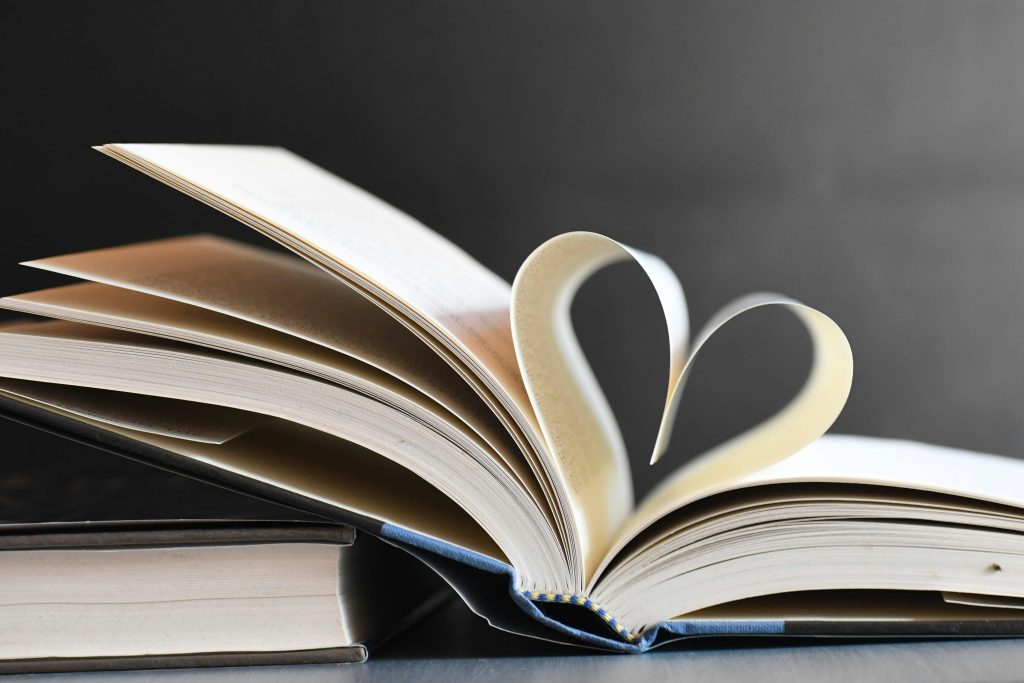
What’s at risk in a world without stories? Simply put, without stories, we lose our curiosity. In 2026, it feels like much of this is by design. We are so bombarded with bad news, with increasingly violent and fascist world powers, that it’s become easier to turn away from bad news, from difficulty, and from one another, than to lean into complexity, and into nuance. Inevitably, we stop asking questions and listening to the world. We stop being curious. But stories keep us curious, and they keep us kind.
The South African theatre-maker Andrew Buckland (2024) says that the sole purpose of theatre, and of all art, is to exercise the empathy muscle. Stories, then – our stories and the stories of others – can be understood as empathy machines. They become devices that allow us to break from our lives, from our insularity, and to arrive at the lives, experiences, and predicaments of others. They allow us to step into those lives with a willingness and understanding. When we invite in the voices of others, and when we tell stories, we are less alone, less absolute in our thinking, and more open to the world.
Storytelling as a Means of Making Sense in the World
I went to university in Makhanda, a small town in the Eastern Cape. There wasn’t a lot going on here; it was mostly a cluster of churches, herds of stray donkeys, and a whole lot of drinking. We were also expected to get an education. I took up lectures in things I thought might teach me more about the world – English Literature, Linguistics, Philosophy, Journalism, Anthropology – but nothing was really landing. The readings felt inaccessible, the lecturers were intimidating. I always felt like I was missing something that everyone else understood quite naturally.
One night, I went to see a student theatre production. Here, sitting in a darkened theatre and watching an immersive and engaging story play out on stage, a number of things began to concretise in my mind – to make sense for the first time – and I was able to connect what I was seeing on stage to what I was reading and being taught in the lecture halls. It was something of an epiphany for me – storytelling was how I made sense of the world.
I started writing about my engagements with art and performance, and publishing them to a reading public through the student newspaper. It was both a way for me to document my experiences and learnings, and extend this experience to others. Call it art journalism, criticism, or just writing, it’s what I’ve been doing now for more than a decade, and it continues to be my primary means of making sense of the world.
Art as Self-Excavation
Storytelling is not only a process of engaging the voices and stories of others, though. Over the years, writing has helped me to make sense of my own story. I’ve come to understand writing as a process of self-reflexivity. To write is to constantly question one’s practice and its function in the world. The Irish poet Seamus Heaney has a poem aptly titled Digging, and here’s the opening line:
Between my finger and my thumb, the squat pen rests, snug as a gun. (Heaney, 1966, 1-2)
Now, here’s the closing line:
Between my finger and my thumb, the squat pen rests. I’ll dig with it. (Heaney, 1966, 1-2)
Here we see the two great possibilities of art and storytelling. We can choose to destroy – to be didactic – or we can choose to search – to pursue new meaning.
It’s a poem and a working philosophy that’s stayed with me, because it speaks to a curiosity and a move towards empathy and understanding through writing. Over the years, I’ve started to see similar instances of this process of searching and excavating in the work of others.
The South African writer, Ivan Vladislavić, has a number of early short stories written in the 1980s. In one of these stories, a young boy is set to work in his family’s backyard during the State of Emergency, tasked with digging a hole in the yard and burying the sins of apartheid. As he digs, he uncovers more than he discards. It’s a story about getting closer to the truth, to oneself, and to one’s place in the world:
I’m digging it in, I have to feed the insatiable earth. I put in bones. Leaf-mulch from the gutters, vegetable peelings, blankets, papers. I soak it all down. The ink begins to run. I take up my spade and I dig it in. (Vladislavić, 2010, 91)
The artist William Kentridge (1991) has an early stop-motion animated film in which his fictionalised alter-ego, the pinstriped industrialist Soho Eckstein, presses down on his coffee plunger in bed. The plunger goes straight through the table and into the mines below Johannesburg where thousands of men were put to work, digging and extracting. It’s a scene of great complicity and interconnectedness, from the intimacy of the bedroom, to the depths of the mines.
The young sculptor, Smiso Cele, works with spades that he extends and distorts to create these surreal and slightly animalistic forms in order to interrogate his own history and lineage – his father being a groundskeeper all his life. But their functionality is short-circuited, they are warped and disfigured. Through the artist’s manipulation of the object, there is a refusal to extract, but an attempt to unearth.
Importantly, all of these works of art draw their narratives entirely from reality, but cast a surreal or slightly distorted lens over them in order to arrive at a new kind of meaning. This is something that’s only possible through the act of storytelling.
Real life is blunt, didactic, and literal. Stories and artworks unsettle our certainty by providing different points of entry, and getting us to ask more questions. They help us become more primed for empathy.
In 2021, I was invited to produce a work with The Centre for the Less Good Idea – a minute-long performative poem. I approached it with a similar intention – I wanted to dig, to excavate, to peel back the layers of my practice. The result was a collage of questions that cut to the heart of my practice: What do I have to say? Whose words are these? To what end?
The Pivot | Arts Writing Into Fiction
The questions were something of a confirmation for me. I had grown despondent and disillusioned by the contemporary art world. When the pandemic arrived, and our galleries and theatre houses were shuttered, my relationship to writing about art and performance was thrown into sharp focus.
The language of the art world became clearer to me, too. Here was a way of thinking, speaking, and writing that was co-opted by the art market. It seemed to me to serve one function – to sell art – and this wasn’t something I was interested in doing. I needed to find my connection to writing again, and to rediscover what it was that first drew me to it – to trouble my practice in order to find my way back to it.
So I took up a Master’s in Creative Writing. Here, I began the process of writing my own stories, and what very quickly emerged is that all of the stories I was interested in writing were set in the South African art world. From the writing I did then, I published my debut collection of short stories, Once Removed (2024), a collection of 13 subtly interlinked stories about artists, galleries, theatres, writers, auction houses, and artists behaving badly. And each story does its own kind of subtle digging. Crucially, Once Removed continues to teach me new things about my own craft, and it’s reminded me that in an increasingly fractured and divisive world, stories matter now more than ever.
Toward Collectivity and Collaboration
Among the stories in Once Removed is ‘Resistance’, a story about a gallery on Jan Smuts Avenue that speaks the language and history of protest art, but when faced with a real protest outside, shamefully, cannot practice what it preaches. This might sound familiar (Tolsi, 2026a).
In another story, ‘Meaningful Contributions’, I write about a group of artists who get funding for a public arts festival from the government, from a particularly moronic arts and culture minister. When the work doesn’t go the way the government thought it would, they pull the funding, leaving the artists to clean up the mess. Again, this might sound familiar (Tolsi, 2026b).
But these stories resonate, not because they’re prescient, relevant, or retelling what news articles or social media posts have already told us, but because they embrace nuance and invite the reader in to co-author meaning. They’re stories that we recognise and can relate to.
Stories allow us to recognise ourselves in the worlds of others, something that news articles and headlines cannot do. Fiction refuses absolutes; it acknowledges that truth and emotion come in shades. I write stories because I’m faced with a world that is full of predicaments and questions, and I’m interested in finding the answers or the solutions to them in less didactic or conventional ways.
It’s also a practice that I’m able to share with others. When we share our stories, and listen to the stories of others, we are engaging with the world through a process of co-authorship – of collective meaning-making.
In my mind, I return to that first year of university often, and it still bristles with clarity and excitement even now – the worn red seats of the theatre, the chatter of audience members, the lowering of the lights, and the essential invitation: step outside of your own life, and step into our world.
But over the years, that great epiphany I had – stories are how you make sense of the world! – has become less important than the secondary act – the moment outside the theatre, after the show has ended. That act of unpacking your experience of what you’ve just seen with others is as significant and as vital as the story or the artwork itself. And this isn’t just the work of artists and writers, it’s an everyday act by everyday people.
As the writer Zadie Smith says in On Beauty (2005): “The world does not deliver meaning to you. You have to make it meaningful.” Put differently, you must always meet the world halfway. And this isn’t a solitary act, it’s a collective act and an everyday act. When we share in each other’s stories, we are deciding to exist in the world in a more collaborative and kind way.
Our curious engagement with the world, and our ability to share that curiosity with others, is what keeps us fundamentally human.
Works Cited:
Buckland, A. 2024. How: Showing the Making. The Centre for the Less Good Idea. [YouTube]. Available: https://youtu.be/vXyfi66hCgg. [Accessed 17.05.2026].
Heaney, S. 1966. Death of a Naturalist. London: Faber & Faber.
Kentridge, W. 1991. Mine. Lillian Gray Art and Art History. [YouTube]. Available: https://youtu.be/mXBxB6-YdG8. [Accessed 17.05.2026].
Mann, D. 2024. Once Removed: Short Stories. Johannesburg: Botsotso Publishing.
Tolsi, N. 2026a. Goodman Gallery Drops Artist Gabrielle Goliath After Her Venice Biennale Selection. Daily Maverick [Online]. Available here: https://www.dailymaverick.co.za/article/2026-01-13-goodman-gallery-drops-artist-gabrielle-grielle-goliath-after-her-venice-biennale/. [Accessed 17.05.2026].
Tolsi, N. 2026b. Gayton vs Goliath: Minister’s Machinations to Cancel Venice Biennale Artwork Head for Court Showdown. Daily Maverick. [Online]. Available here: https://www.dailymaverick.co.za/article/2026-02-10-gayton-vs-goliath-ministers-machinations-to-cancel-venice-biennale-artwork-head/#Echobox=1770783134. [Accessed 17.05.2026].
Vladislavić, I. 2010. Flashback Hotel. Johannesburg: Umuzi.
By David Mann
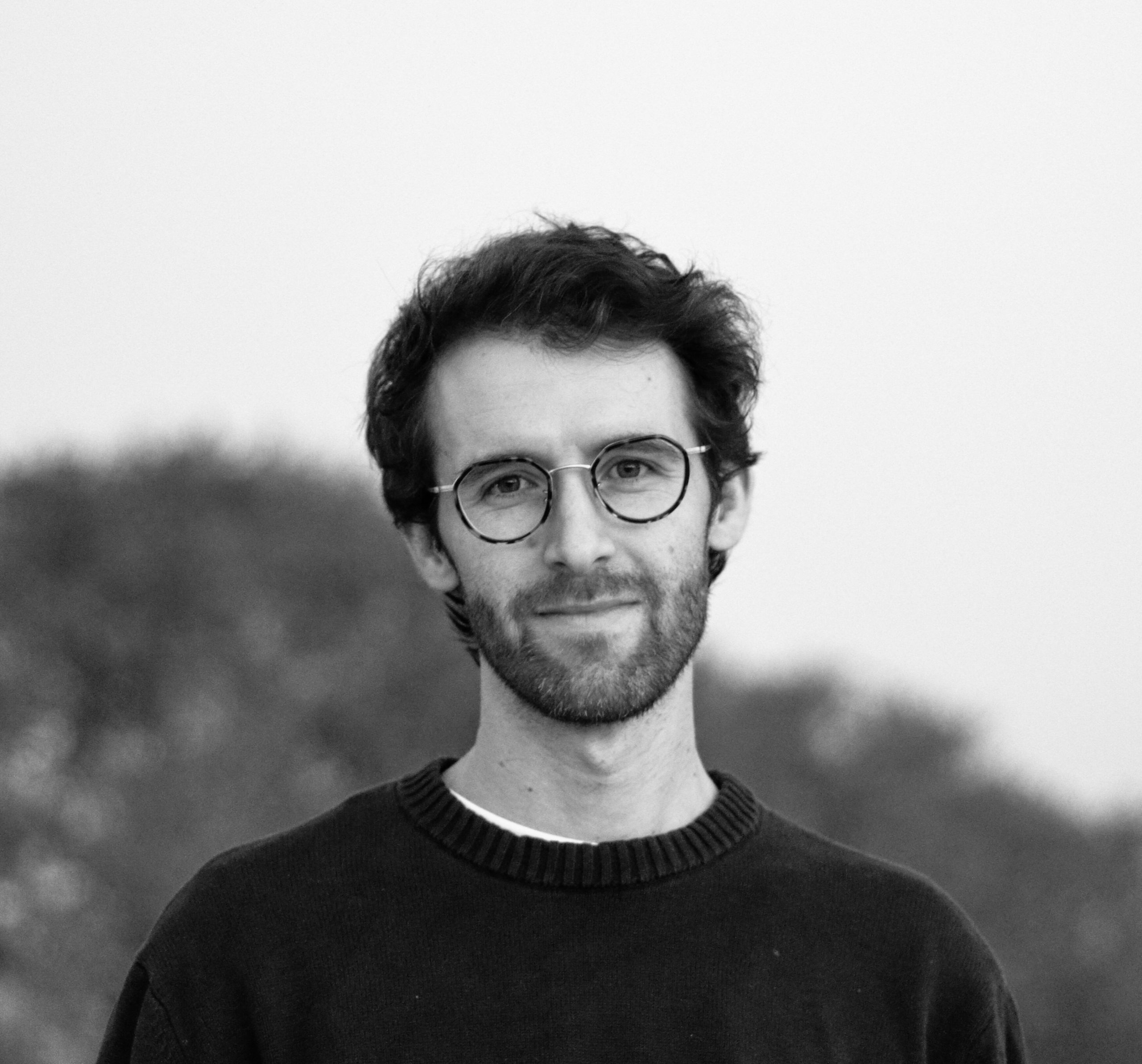
David Mann (b.1992) is a writer, editor, and art critic from Johannesburg. His short story collection, Once Removed, was published in 2024. That same year, it was awarded the Thomas Pringle Short Story Prize and shortlisted by the NIHSS Awards and the Nadine Gordimer Award for best short story collection.