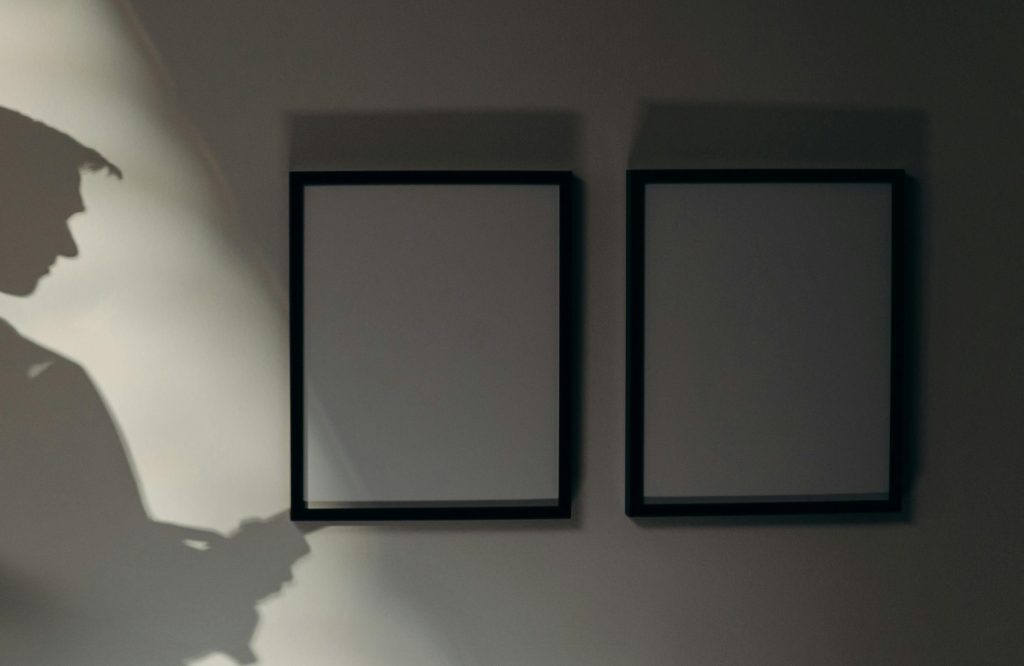
Is art dead? Have we killed it? Perhaps, but not through neglect, and not because people stopped caring. If anything, we care more than ever. We write about art, theorise about it, curate it, explain it, and defend it. We surround it with meaning, with context, with interpretation. And yet, in doing so, something essential seems to have been lost.
Walk into almost any contemporary exhibition space and the problem becomes immediately apparent. The artwork is no longer alone. It is accompanied by paragraphs, pamphlets, curatorial statements, wall texts, and audio guides. Before you have even had the chance to encounter the work, you are told what it is, what it means, and why it matters. The encounter is structured in advance, and the viewer is positioned not as a participant, but as a recipient of a pre-established interpretation.
The result is subtle, but significant. The exhibition becomes an exhibition of essays. The artwork no longer stands on its own; instead, it becomes illustrative, an example of something already articulated elsewhere. Meaning is no longer something that emerges in the interaction between viewer and work, but something that has been prepared beforehand. The viewer’s role is not to engage with the artwork, but to recognise and affirm what has already been said about it.
This situation reflects a deeper shift in how we have learned to approach art. We tend to stand at a distance from it, to look at it, assess it, and determine what it is supposed to mean. The artwork becomes something to be judged, rather than something to be encountered. This way of seeing feels natural to us now, but it has a history. It is rooted in a philosophical tradition that treats aesthetic experience as a form of detached judgement, where the viewer remains separate from the work. In this model, most clearly articulated by Immanuel Kant, the experience of art is purified of personal involvement, allowing the viewer to appreciate it from a position of distance. While this helped to secure the autonomy of art, it also established a mode of spectatorship in which the artwork becomes an object to be assessed rather than a subject in itself and something that addresses us directly.
What we are now seeing in contemporary exhibition spaces is an intensification of this distance. The artwork is no longer simply something we stand apart from; it is something that is already interpreted for us before we even arrive. Explanation does not follow the encounter, it precedes it. In doing so, it closes down the very space in which meaning might have emerged. Instead of entering into a dialogue with the artwork, we arrive already equipped with answers. The artwork is no longer allowed to speak.
What this reveals is a deeper collapse of trust. We no longer trust the artwork to disclose anything on its own. We no longer trust the viewer to encounter it meaningfully. And perhaps most tellingly, we no longer trust the encounter itself as a site where meaning can arise. This lack of trust is visible not only in museums and galleries, but also in art schools and competitions. It is not uncommon to encounter works that are technically or formally underdeveloped, yet elevated by the strength of their accompanying explanation. In such cases, the writing carries the work. The idea – already articulated in language – does the heavy lifting, while the artwork itself becomes secondary.
When art is approached in this way, it begins to resemble any other product. It is packaged, framed, and delivered in a form that ensures it can be easily understood and consumed. This is not simply an institutional problem, but part of a broader cultural condition in which experience itself is increasingly managed in advance. Long before digital algorithms began to organise our preferences, thinkers were already warning about this tendency. Theodor Adorno and Max Horkheimer described how art, under the pressures of modern society, risks becoming standardised and commodified – something produced not to challenge or transform us, but to be consumed like any other form of content (Adorno & Horkheimer, 2002, 129). In such a context, the artwork no longer confronts us; it reassures us by fitting neatly into expectations that have already been set.
Yet even this diagnosis leaves open an important question. If art is caught within these structures, how can it still matter? How can it still do anything other than confirm what is already known? Perhaps the problem lies not only in how art is produced, but in how it is approached. What if the artwork is not something that stands before us as an object to be decoded, but something that draws us into a process of engagement? What if meaning is not something that exists in advance, waiting to be extracted, but something that comes into being through the encounter itself?
This is a very different way of thinking about art. It suggests that the artwork is not simply there to be interpreted, but that it participates in the creation of meaning. In this sense, encountering a work is less like solving a problem and more like entering into a conversation. This idea finds its most compelling philosophical expression in the work of Hans-Georg Gadamer, who describes the experience of art as a kind of play in which the viewer is not a detached observer, but an active participant. The artwork does not simply present something to us; it involves us, draws us in, and unfolds through our engagement with it (Gadamer, 2004, 102).
If this is the case, then the first encounter with an artwork becomes crucial. It must be unguarded, unscripted, and open to the possibility that nothing will happen – or that something unexpected will. Not every artwork needs to succeed in speaking to us. Not every encounter needs to result in understanding. It is entirely possible for a work to fall flat, to remain silent, or to offer nothing in a given moment. This is not a failure in any meaningful sense. Rather, it is part of the structure of the experience itself. What we call ‘failure’, in this sense, is often simply the absence of a forced meaning. An artwork that does not immediately resonate still participates in the field of experience. It resists, withholds, and waits, and in some cases, it is precisely this resistance that gives it its power.
To guarantee meaning in advance is to eliminate this possibility altogether. It transforms the artwork from something that can confront us into something that merely confirms what we already know, or what we already ought to know. It replaces the uncertainty of experience with the safety of interpretation and ensures that the viewer is never left alone with the work, never required to respond, to struggle, or to form a position of their own.
This tendency extends beyond the gallery. In an age of curated feeds and predictive systems, we increasingly encounter the world through pre-formatted frames. Our experiences are organised in advance, our responses anticipated, and our engagement subtly guided. In this broader context, the over-explained artwork is not an isolated phenomenon, but a symptom of a wider condition in which the space of encounter is steadily shrinking. We are losing the ability to experience things without mediation.
To resist this does not require abandoning explanation altogether, but restoring its place. The artwork must come first. It must be allowed to speak – or to fail to speak – on its own terms. The viewer must be allowed to respond without instruction, to encounter the work without being told in advance what to see or think. Only after this initial engagement should interpretation enter, not as a replacement for experience, but as a continuation of it.
This is not a call for purity, nor a rejection of theory. It is an attempt to re-open a space that has quietly been closed: the space in which art can still happen. Art is not dead. But we have made it increasingly difficult for it to live.
Works Cited:
Adorno, T.W. & Horkheimer, M. [1944] 2002. Dialectic of Enlightenment. Translated by E. Jephcott. Stanford: Stanford University Press.
Gadamer, H-G. [1960] 2004. Truth and Method (2nd rev. ed.). Translated by J. Weinsheimer & D.G. Marshall. London: Continuum.
Kant, I. [1790] 2001. Critique of the Power of Judgment. Translated by P. Guyer & E. Matthews. Cambridge: Cambridge University Press.

By William Shaer
William Shaer is a South African philosopher interested in art, technology, and the experience of meaning, truth, and knowledge in contemporary life. He is currently pursuing a PhD in Philosophy at the University of Cape Town.